
How a session runs
Two test rounds
Players learn the market by playing it, first with long cards and then with short ones. Nothing counts yet.
7 rounds
Each round: simultaneous decisions, an event check, results, three minutes of community council, then a referendum, an election and policy.
A debriefing
The part that matters most. Participants step out of their roles and talk about what happened and why.
Losing takes one round. Getting back takes three.
Push harder and you earn more this round. You also thin the landscape, and a thin landscape draws bad weather: an event wipes out the year’s earnings and takes 80 points from everyone at the table — including the players who held back.
One careless round drops the state a step. Coming back up needs two rounds in a row where every single farm holds to low intensity under a policy the community had to vote for. Any one player breaking ranks resets it, and nobody is obliged to tell the truth about what they are about to play.
And when the landscape stays in the red, the Governor is handed emergency powers: the right to take 30 points off one person. Groups discover fast that the hard part was never the arithmetic.
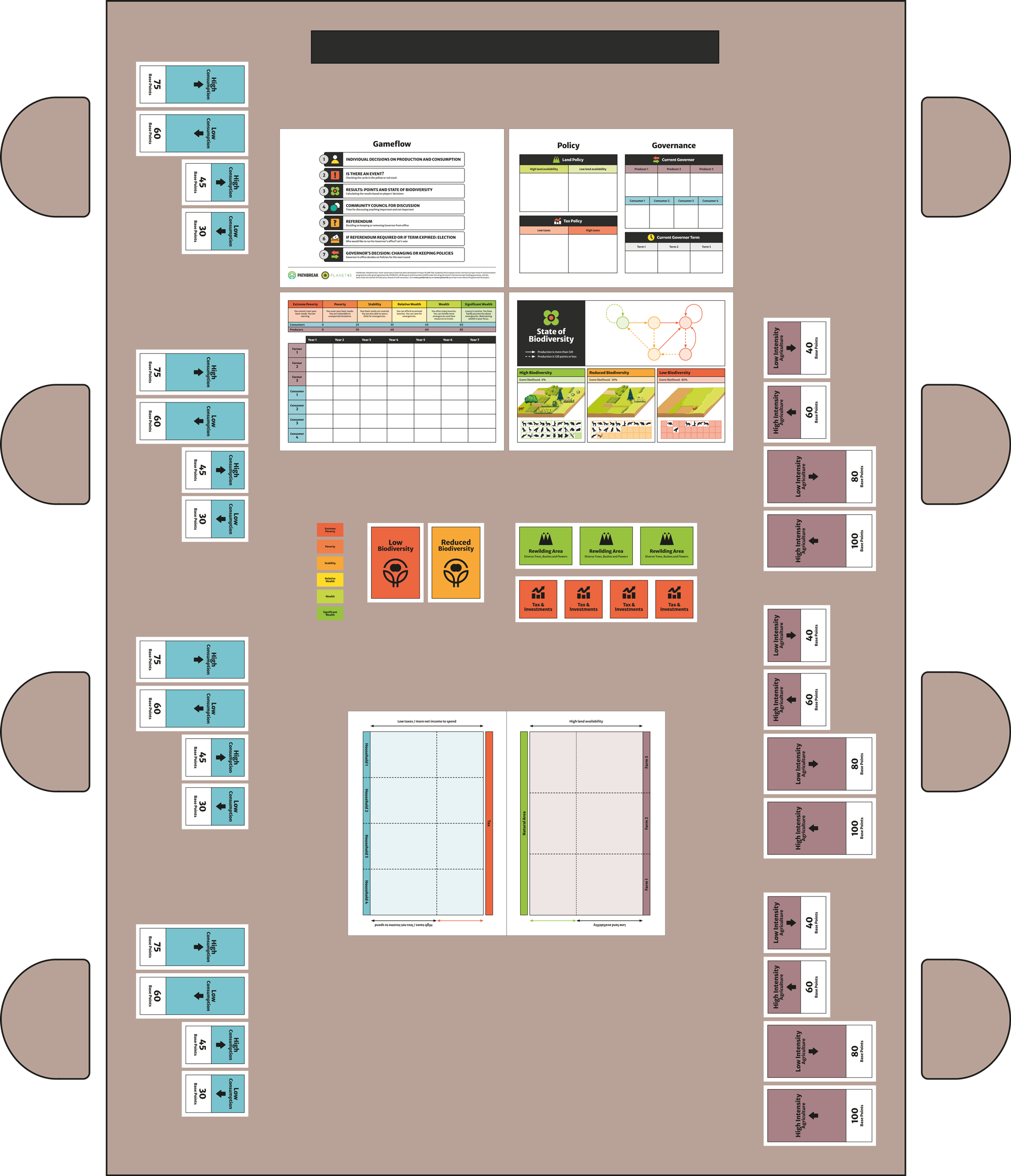
The table argues. The app keeps an honest record.
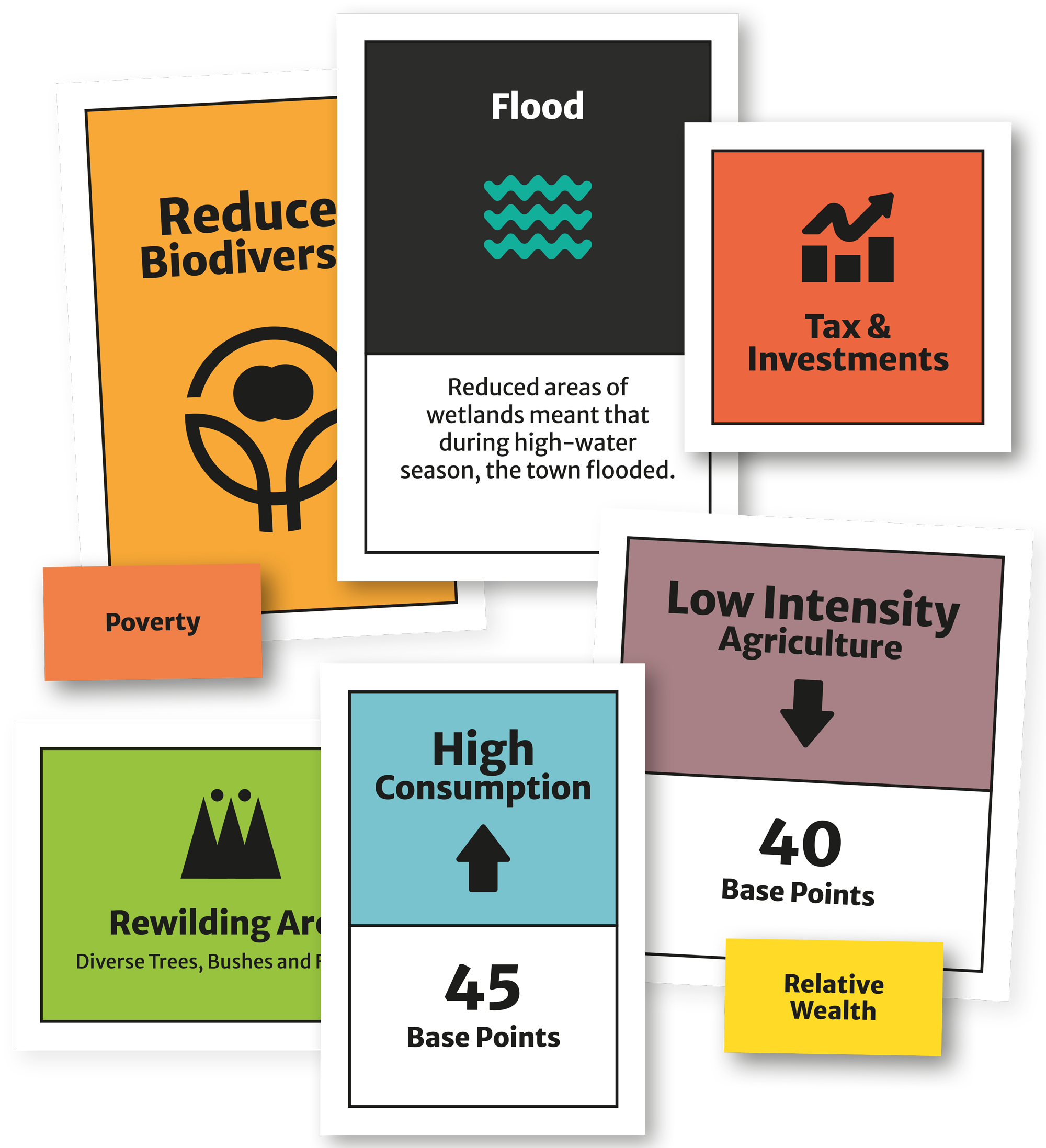
The facilitator types in what each player actually put on the board. Everything else — points, livelihood bands, the state of biodiversity, whether emergency powers unlock — follows from those seven cards. No arithmetic at the table, and no room for the scoring to drift with whoever is running the session.
Elections, referendums, terms and vote counts are kept as well. So afterwards you can ask not only how the landscape ended up, but who was in office when it turned, and what the community had voted for the round before.
Please note that the Pathbreak game is not an online game you can start instantly. To play, you’ll need at least eight people: seven players and one facilitator. Facilitators will need to prepare in advance by studying the materials and manual, preparing printouts, scheduling the game session, and inviting and confirming participants. This preparation is essential for a smooth and engaging game experience.